
Introduction
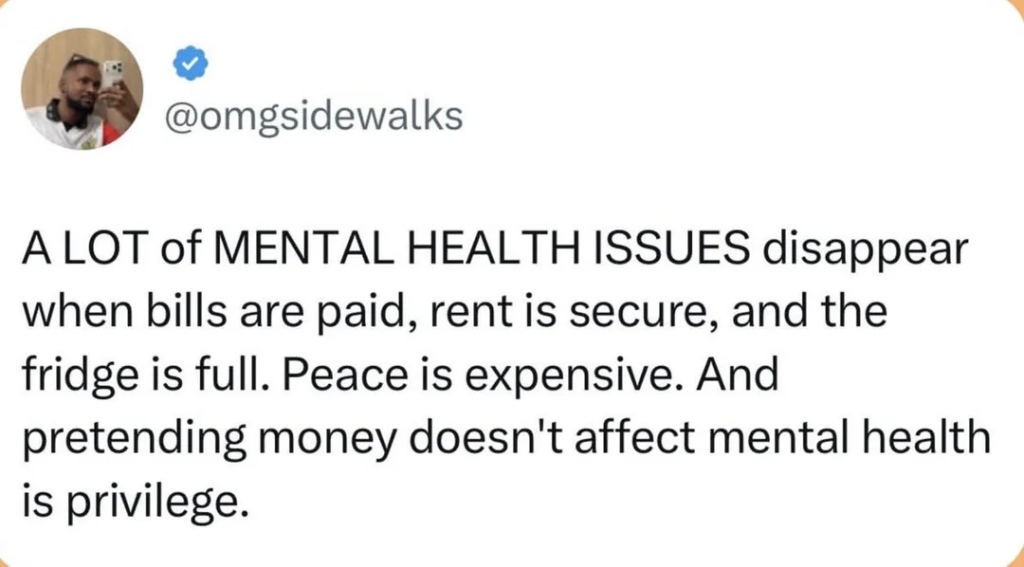
The image presents a thought-provoking statement: “A lot of mental health issues disappear when bills are paid, rent is secure, and the fridge is full. Peace is expensive. And pretending money doesn’t affect mental health is privilege.” This message emphasizes the powerful connection between financial stability and psychological well-being. While mental health is influenced by many biological, emotional, and social factors, economic security plays a significant, if not the most important, role in reducing stress and improving quality of life.
Financial Stability as a Foundation for Mental Well-being
Meeting basic needs such as food, shelter, healthcare, and utilities is essential for both physical and mental health. When individuals constantly worry about paying rent or buying groceries, they often experience chronic stress, anxiety, and emotional exhaustion. Financial stability provides a sense of security, allowing people to focus on personal growth, relationships, education, and career development instead of daily survival.
The Psychological Burden of Financial Stress
Financial hardship can create feelings of helplessness, fear, and uncertainty. People struggling with debt, unemployment, or low income may experience sleep disturbances, depression, anxiety, and reduced self-esteem. The continuous pressure of making ends meet can affect decision-making, family relationships, and overall emotional resilience. Although financial security does not eliminate every mental health condition, it significantly reduces one of the most common sources of stress.
Money Is Not the Only Factor
While the statement highlights an important truth, it should not be interpreted to mean that all mental health disorders disappear with financial security. Conditions such as major depression, bipolar disorder, schizophrenia, post-traumatic stress disorder (PTSD), and anxiety disorders can affect people regardless of their income or social status. Wealthy individuals may also struggle with mental illness due to genetic, biological, or traumatic factors. Therefore, financial stability is an important protective factor but not a universal cure.
The Role of Privilege
The image argues that ignoring the impact of money on mental health reflects privilege. This perspective suggests that people who have never experienced financial insecurity may underestimate the emotional burden of poverty. Individuals with stable incomes often have greater access to healthcare, therapy, nutritious food, safe housing, and supportive environments, all of which contribute to better mental health outcomes. Recognizing this privilege encourages greater empathy and more informed discussions about mental health.
Addressing Both Economic and Mental Health Challenges
Improving mental health requires a combination of economic and healthcare solutions. Governments and communities can support mental well-being by promoting employment opportunities, affordable housing, accessible healthcare, education, and social welfare programs. At the same time, expanding access to counseling, therapy, and mental health awareness helps individuals cope with challenges that money alone cannot solve.
Conclusion
The image highlights a reality that many people experience: financial security can greatly reduce stress and improve mental well-being. Having stable housing, enough food, and the ability to pay bills creates an environment where individuals are more likely to feel safe and hopeful. However, mental health is complex, and not every condition can be resolved through financial improvement alone. A balanced understanding recognizes that economic stability is a crucial component of mental wellness, while comprehensive mental healthcare remains equally essential.